
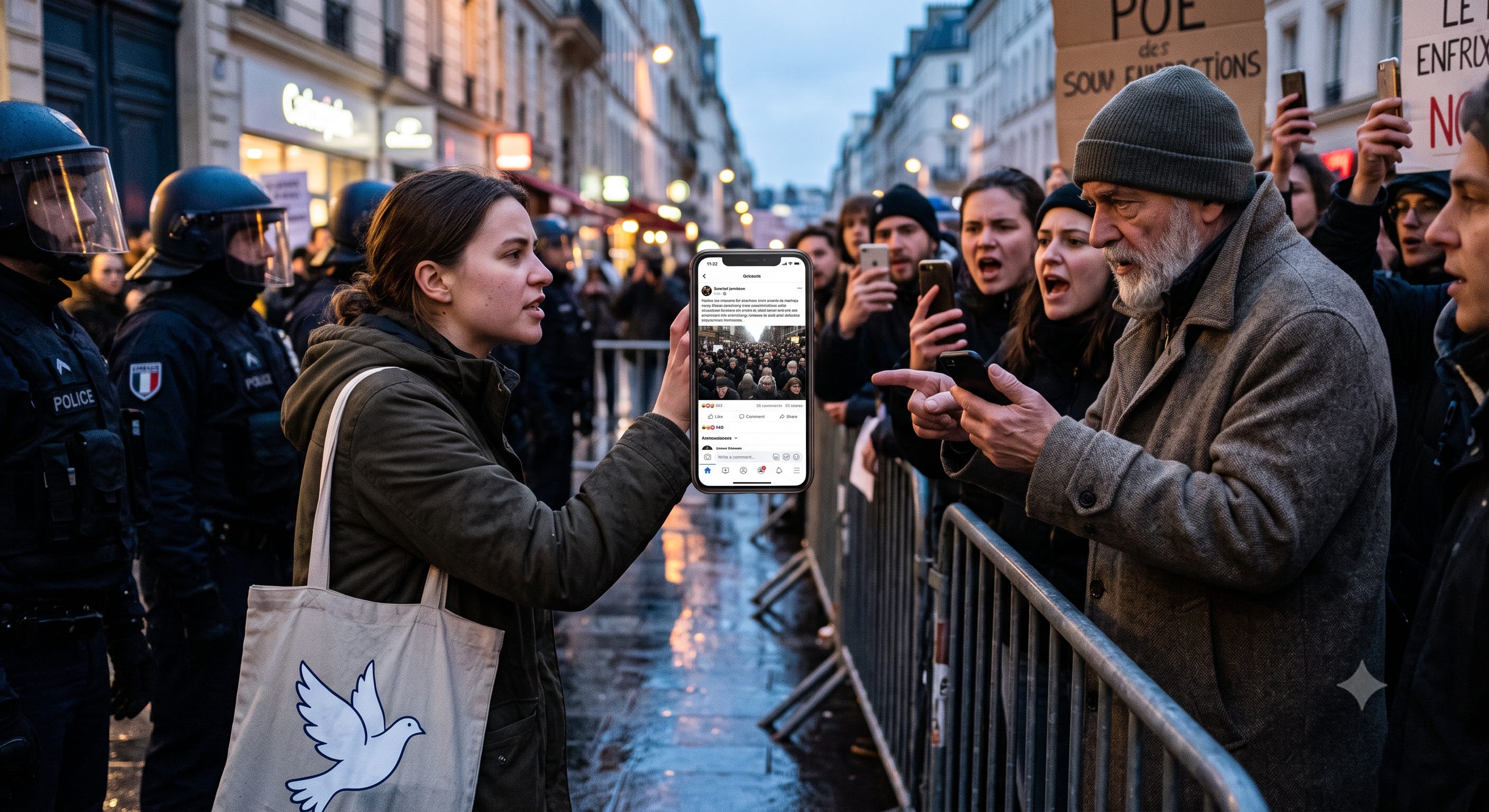
It was supposed to be a day of shared grief. Workers uncovered a mass grave from a past war, giving families closure. Maya, a journalist, posted a photo of the site with a quiet tribute. Thousands from two historically rival groups clicked “Sorrow” emojis, a rare moment of unity.
Then, a system glitch broke the platform.
While Group A saw normal sad faces, the programming fault converted all “Sorrow” emojis to “Laughing” faces on Group B’s screens. To Group B, it looked like Group A was mocking their dead.
The Spark
Mental Panic: No one paused to question the screen. Grief instantly turned to defensive rage and betrayed trust.
Physical Violence: Furious users shared screenshots, driving angry crowds to the city center. The solemn vigil devolved into violent street clashes.
By the time the tech company patched the bug and issued an apology, windows were smashed, people were injured, and hard-earned peace was shattered, all because of an unverified screen.
Let Not A Screen Control Our Hearts
A screen doesn’t always show the truth. Software glitches, fake posts, and broken code can easily make us see things that aren’t actually happening.
When we instantly believe every emoji, picture, or word we see online, we let a simple computer error turn harmless misunderstandings into real-world violence.
Before you let a post make you angry, pause and think: Is this actually true, or is the screen lying?
Checking the facts before you react takes only a second, and it can keep peace alive.
Should tech companies build safer platforms and fix these dangerous bugs? Yes, absolutely. But we can't rely on them alone. In the end, the choice to pause, think, and verify before we react belongs to us.